| Title: | Reflection |
| Artist: | Daniel Ounalom |
| Medium: | Unity VR Expereince |
| Created: | 06 December 2025 |
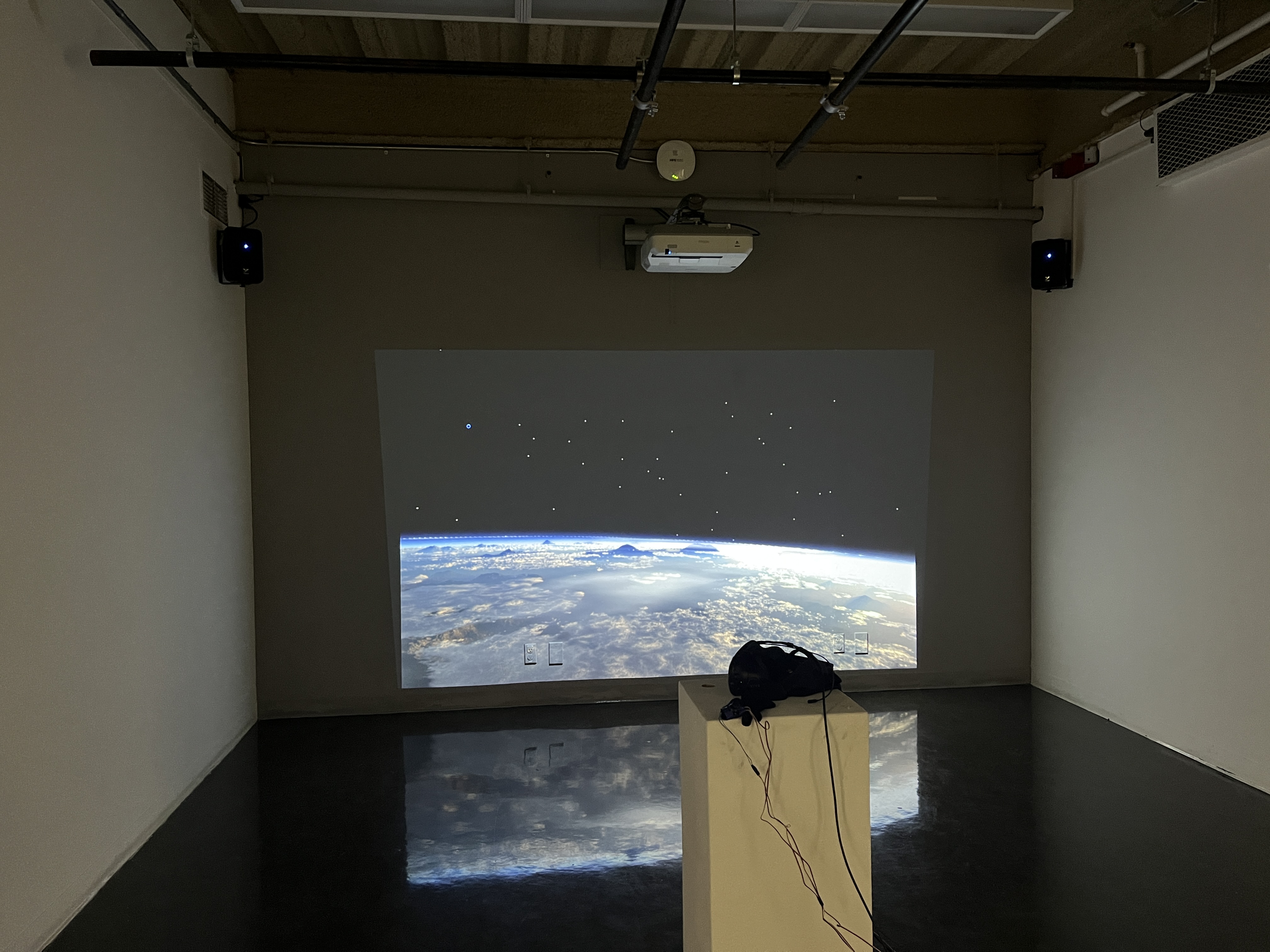
"Reflection" is a VR project that explores my personal memories of childhood and adolescence as an immersive, interactive medium. Initially, I wanted to use VR as a companion to an entire installation featuring projections. But the plan wasn't going anywhere and didn't have any central meaning. After talking to Carl, I started getting ideas for evolving the linear VR installation that forces the audience to feel what I felt, but into experiences that are metaphorical environments of my experiences or anything related to my past. Combined with the ability to move within the experience and the narrative, the piece can invite the audience to explore moments in my past, even though it's abstract by nature. The core themes during the development phases of “Reflection” were moving between two drastically different communities, repeatedly trying to fit in, and eventually learning to accept isolation as a form of emotional survival. While I tried to keep within the core themes, development shifted to something akin to a reflection of my past. I found that if I kept dwelling on the past too much, I wouldn’t get anywhere in life. So, I was willing to accept those moments from the past and have already defined who I am today. While those moments are painful, they have definitely shaped the logic I have experienced in the past, and I can learn from them in hopes of helping me push to become a better version of myself. There were two challenges during development: Unity’s XR Toolkit and using the Arduino Uno R4 Wi-Fi for the controls. Unity’s XR toolkit was a challenge to learn, as it was the first time using VR within Unity or VR in general. The first challenge in Unity was what controls the player could use in the VR experience, which was easy, until I had to investigate why the player model was moving away from the VR character, which forced me to disable the character. Gravity also became an issue, as the player would sink into the floor, and I had to cut a stage involving Gravity. The Arduino Uno R4 Wi-Fi has another challenge because the promised wireless requires more research into web servers to send serial data, which I didn’t have time for. To make up for the lost ability, I resorted to using longer USB cables to connect directly to the IDE environment. Another issue was the keyboard library; I don’t want to get into the specifics, but the solution was to use delays with Keyboard.release().